






Preface
In 2026, global plastic ban supervision has been comprehensively tightened. China’s national “Bamboo Substitution for Plastics” strategy is fully implemented, while new regulations in the EU, North America, Southeast Asia and other regions are continuously upgraded. Single-use plastics have officially entered an era of mandatory replacement, heavy penalties and full-scenario compliance.
Packaging compliance has become an essential requirement for catering, fresh food, e-commerce logistics and export enterprises. Compared with traditional plastics and ordinary degradable materials, bamboo fiber pulp molding serves as a universal green packaging solution for both domestic and global export markets, featuring full compliance, natural degradability and low-carbon sustainability.
1. China’s Full-scale Plastic Ban: Bamboo Substitution Becomes a Long-term National Strategy
1.1 Full Ban Implementation with High Compliance Risks
Supported by the updated national plastic restriction policy, Solid Waste Law and the Environmental Code officially enforced in 2026, China has achieved full-coverage and standardized supervision over single-use plastics:
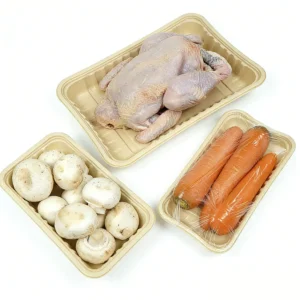
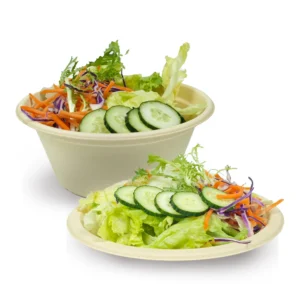
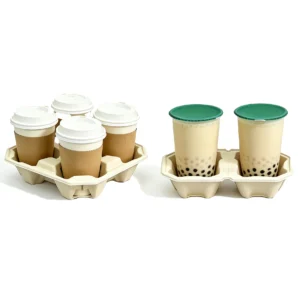
Catering Industry: Single-use plastic tableware is banned in urban areas nationwide. Non-degradable plastic packaging for food delivery is strictly controlled, while plastic trays and cup pads in supermarkets and tea stores are gradually phased out.
Logistics & Express Delivery: Since the end of 2025, plastic foam and plastic inner liners have been prohibited in domestic courier outlets, with plant fiber pulp molding promoted as the official buffer packaging alternative.
Tourism & Hospitality: Star hotels, scenic spots and campus canteens no longer actively provide single-use plastic products, and prioritize environmentally friendly tableware made of natural plant fibers.
Compliance Red Line: Enterprises violating plastic ban regulations will face a maximum fine of 100,000 RMB, with violations recorded in environmental credit files and included in scenic spot and urban civilization assessments.
1.4 Policy Dividends Empower Bamboo Fiber Industry
“Bamboo Substitution for Plastics” has been elevated to a long-term national low-carbon industrial strategy instead of a short-term trend. Major bamboo-resource provinces including Hunan, Guangdong, Sichuan, Zhejiang and Fujian provide 30%-60% financial subsidies for bamboo fiber packaging procurement and production line construction.
Bamboo fiber pulp molding has been listed in the green procurement catalogs of governments, state-owned enterprises and campus canteens. The official launch of bamboo product carbon footprint standards in 2026 enables authoritative LCA low-carbon reports, fully meeting brand ESG disclosure and low-carbon supply chain construction needs.
1.3 Clear Material Priority: Natural Fiber Outperforms Degradable Plastics
Official regulatory priority is clearly defined: Natural Plant Fiber > PLA/PBAT Degradable Plastic > Traditional Plastic.
Synthetic degradable plastics such as PLA can only decompose under industrial composting conditions and are difficult to degrade in ordinary waste environments, bringing potential compliance risks. In contrast, bamboo fiber achieves complete natural degradation in soil and home compost without professional equipment, leaving no environmental residues.
2. Updated Overseas Plastic Ban Regulations Raise Export Packaging Thresholds
2.1 EU: The World’s Strictest Packaging Compliance Standards
SUP Directive: Single-use plastic tableware, foam food containers and plastic straws are fully banned, with only natural plant fiber materials recognized as compliant alternatives.
PPWR Regulation (Enforced in August 2026): PFAS harmful chemical coatings are strictly restricted, and fluorine-free bio-based bamboo fiber molding achieves natural compliance. Plastic packaging is subject to high ecological taxes, while plant fiber packaging only bears 15%-20% of equivalent plastic tax costs.
EUDR Deforestation-free Regulation: Bamboo is renewable annually and causes no damage to primary forests, featuring simple traceability and smooth customs clearance with obvious advantages over traditional wood pulp packaging.
Carbon Tariff Trend: Bamboo fiber has a far lower carbon footprint than plastics and PLA materials, helping export enterprises avoid carbon trade risks.
2.2 High-standard Markets (UK, US, Canada): Zero Tolerance for Plastics and Harmful Coatings
The UK and Canada have fully banned single-use plastic tableware and EPS foam fresh food trays. Core U.S. states including California and New York have phased out foam packaging and disposable plastic bags with a total ban on PFAS in food packaging, with a maximum daily fine of 50,000 USD for violations. Food-grade bamboo fiber molding features safety and zero residue, gaining official recognition by the FDA.
2.3 Emerging Markets (Southeast Asia, Latin America): Comprehensive Phase-out of Foam Plastics
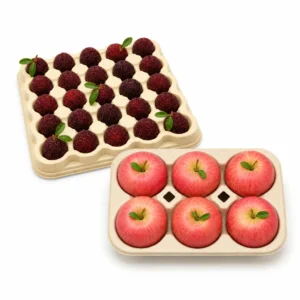
Countries in Southeast Asia, the Middle East and Latin America have successively introduced plastic ban policies to eliminate foam plastics and non-degradable plastic bags. With the unique advantages of natural antibacterial properties and breathable fresh-keeping performance, bamboo fiber has become the preferred alternative for fresh food, egg and food packaging.
Current core procurement standards of international brands: PFAS-free, naturally degradable, low carbon footprint. Bamboo fiber pulp molding fully meets all international mandatory standards and is irreplaceable by plastics, PE-lined paper and PLA materials.
3. Core Industry Development Trends (2026-2029)
Trend 1: Market Segmentation – Bamboo Fiber Dominates High-end Scenarios
Bagasse and recycled pulp occupy low-end mass markets, while original bamboo fiber focuses on high-end scenarios, including fresh food cold chains, pre-cooked meals, high-end catering, 3C & beauty buffer packaging and foreign trade gift boxes, supporting a product premium of 8%-20% and an annual industry growth rate exceeding 18%.
Trend 2: Fluorine-free & Plastic-free Bio-coating Becomes Industry Standard
PE lining and fluorine-containing waterproof agents are completely phased out globally. Bamboo fiber molding with full bio-based waterproof and oil-proof coatings will form core technical barriers and become a universal compliant product for both domestic and export sales.
Trend 3: Steady Growth in Four Core Application Scenarios
Food delivery catering, fresh food & egg packaging, e-commerce buffer packaging and high-end industrial gift packaging constitute the four core growth pillars of the bamboo molding industry with continuously booming market demand.
Trend 4: ESG Low-carbon Performance Becomes a Mandatory Procurement Threshold
Global brand supply chains fully assess carbon footprint. With strong carbon sequestration capacity and low emissions, bamboo fiber adapts to the zero-carbon development trend and gradually replaces high-carbon, grain-consuming PLA degradable plastics.
Trend 5: Continuous Cost Reduction and Rapid Market Penetration
With mature large-scale automatic production lines and on-site bamboo powder pulping technology, the cost gap between bamboo molding and traditional plastics will narrow to 1.2-1.5 times by 2029, accelerating the arrival of the full-scale replacement era.
Trend 6: China Dominates the Global Bamboo Fiber Industrial Chain with Booming Export Orders
China holds more than 90% of global bamboo fiber molding production capacity with a complete and cost-effective industrial chain. Overseas production capacity is scarce and costly, ensuring the industry’s export growth rate will steadily exceed 15% in the next three years.
4. Five Core Advantages of Bamboo Fiber Pulp Molding
✅ Dual Market Compliance: One product meets both domestic plastic restriction and global export standards
✅ Complete Natural Degradation: Degradable in soil and home compost without industrial composting facilities, zero compliance risks
✅ Differentiated Performance: Natural antibacterial, breathable and moisture-proof, superior to ordinary pulp molding and plastics for fresh food cold chain scenarios
✅ Abundant Policy Dividends: Eligible for domestic subsidies and green bidding, compatible with international low-carbon tax incentives
✅ Sustainable & Stable Raw Materials: Annually renewable, no cultivated land occupation, strong resistance to raw material price fluctuations
Conclusion
The global plastic ban is not a short-term trend, but a decade-long industrial structural transformation. With traditional plastics gradually phased out and synthetic degradable plastics having inherent defects, bamboo fiber pulp molding has become the mainstream global plastic replacement solution for the next 3-5 years, relying on its core values of full compliance, superior performance and low-carbon advantages.
Upgrading to bamboo fiber green packaging is not only a mandatory compliance measure for enterprises to avoid penalties, but also a strategic layout to seize global green market opportunities and unlock long-term industry dividends.
#BambooSubstitutePlastic #BambooFiberPulpMolding #SustainablePackaging #EcoFriendlyPackaging #GlobalPlasticBan #LowCarbonPackaging #ExportCompliance