







When the “dual carbon” goals and global sustainability become the common language of the business world, an ESG report is no longer a mere decorative accessory—it has become an essential passport for companies to earn market trust, access green finance, and connect with international clients. Yet, what truly gives an ESG report weight, data, and warmth is often not the grand strategic declarations, but the details hidden at the farthest end of the supply chain—for example, a humble piece of packaging.
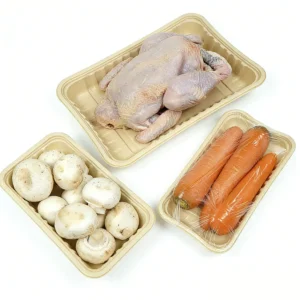
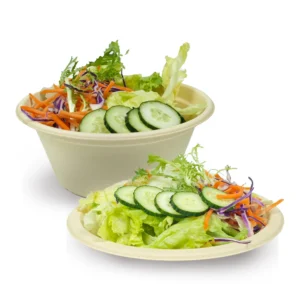
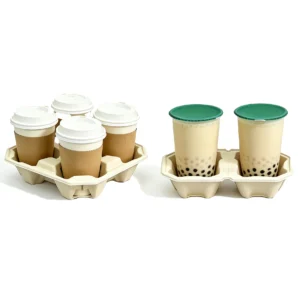
We are a factory that starts with those details, helping companies embed ESG into their products. Our products are not complicated: bamboo fiber cup holders, bamboo fiber egg cartons, and bamboo fiber fresh produce trays. But these seemingly ordinary packaging items can become powerful building blocks for a robust ESG report.
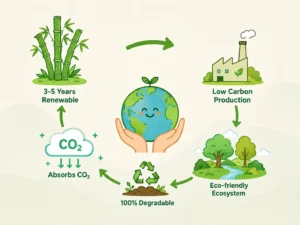
Let’s start with the Environmental dimension. For every ton of bamboo fiber packaging we produce, CO₂ emissions are reduced by [X] tons, and the carbon footprint is [Y]% lower than that of traditional materials. The full lifecycle of bamboo fiber packaging approaches near‑zero carbon—from bamboo forest nurturing and raw material processing, to manufacturing trays, holders, and finally to degradation after disposal—every step minimizes carbon emissions. Supporting all this is bamboo, a resource that matures and can be harvested in just 3‑5 years. Bamboo grows fast, can be harvested repeatedly once planted without damaging the surface ecology, and has a carbon sequestration capacity far exceeding that of ordinary trees. After disposal, our products are 100% biodegradable, leaving no microplastics or non‑degradable white waste behind. In other words, for every ton of our packaging a customer purchases, they are reducing the earth’s burden by [Z] units, while providing tangible, quantifiable evidence for key ESG indicators such as “greenhouse gas emissions,” “waste management,” and “resource circularity.”
Now look at the Social dimension. Responsible packaging must not only be eco‑friendly, but also people‑friendly. All our bamboo fiber raw materials carry FSC® forest certification—meaning every bamboo stem comes from well‑managed forests that respect ecological balance and the rights of indigenous communities. Our factory holds ISO quality system certification, ensuring full traceability from raw material intake to finished product dispatch. Moreover, whether it is cup holders in contact with hot beverages, or trays for fresh eggs, vegetables, or meat, we always use food‑contact‑safe materials, free from harmful additives, to protect consumers’ safety with every bite. These social values can be fully reflected in chapters of a company’s ESG report such as “employees and community,” “product safety and quality,” and “supply chain social responsibility,” turning the report into a story with heart—not just cold data.
Finally, the Governance dimension. A sound ESG report requires companies to have rigorous supplier screening and oversight capabilities. We ourselves are a manufacturer that practices green procurement and responsible supply chain management—our upstream bamboo sources are transparent and traceable, our production processes meet clean production standards, and our employment and management systems are standardized and compliant. By choosing to work with us, customers gain complete, credible supporting documentation for supplier ESG due diligence, green procurement audits, and sustainability disclosure.
Ultimately, an ESG report does not exist just to fill in tables; it should be an honest account of a company’s real responsibility. And the bamboo fiber cup holders, egg cartons, and fresh produce trays we provide can bring that responsibility from paper into products—turning slogans into real processes, from every unboxing to every use to every degradation. If you want your next ESG report to be more convincing, more coherent, and more compelling, why not start with a piece of bamboo fiber packaging?