




An egg carton needs to work across the entire retail route, from the packing line and distribution center to the shelf. For egg producers, private-label retailers, and packaging distributors, a molded bamboo fiber carton is worth evaluating on three points: how it holds the eggs during handling, how it performs under the intended storage conditions, and how it presents the brand at retail.
Check the carton with the eggs you sell
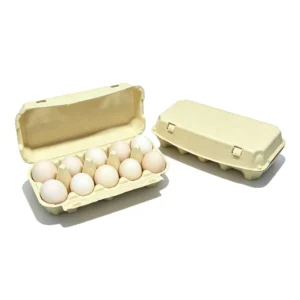
The molded pockets separate the eggs, while the lid and base form the closed pack. When reviewing samples, use the egg size you actually sell. Check how the eggs sit in the pockets, whether the lid closes smoothly, and how the filled cartons fit in your outer cases. After a representative stacking and handling trial, inspect the closure, the shape of the carton, and the condition of the eggs.
Evaluate chilled handling under your own conditions
If the cartons will pass through chilled storage, include that stage in the sample trial. Record the storage temperature, holding time, and stacking arrangement. On removal, check whether the base still supports the eggs, the carton keeps its shape, and the lid opens and closes as expected. These observations give your team a basis for comparing options along its own distribution route.
Choose a finish for the way shoppers see the pack
An unprinted bamboo-tone carton shows the fiber texture. Direct printing works well for a simple logo or a short message. A label gives the brand more room for artwork and product information. Review the finished sample from the shopper’s viewing angle, and check barcodes and closures on the actual pack before approving the artwork.
If you are sourcing egg cartons for a retail brand or a distribution program, share your egg size, pack count, handling conditions, and preferred print or label finish. We can help you narrow down the formats to sample. Explore our egg carton range